

Inscribed in 196 BC in honour of Ptolemy V, the Rosetta Stone carried a single decree in hieroglyphs, Demotic script and ancient Greek. That Greek text gave Jean-François Champollion the key to deciphering hieroglyphs in 1822, and the stone remains the British Museum’s most visited object.



Inscribed in 196 BC in honour of Ptolemy V, the Rosetta Stone carried a single decree in hieroglyphs, Demotic script and ancient Greek. That Greek text gave Jean-François Champollion the key to deciphering hieroglyphs in 1822, and the stone remains the British Museum’s most visited object.
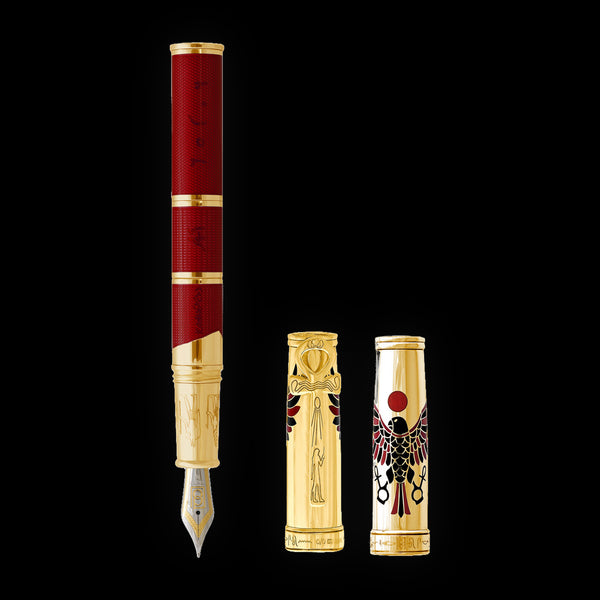
This was the first David Oscarson collection to incorporate moving parts: the barrel is divided into three rotating sections, one for each language, engraved with the inscriptions Ptolemy, Ever-Living and Beloved of Ptah. As for Champollion, the Greek is the key to aligning all three. The cap features the Winged Disk of Horus inlaid in opaque enamel, the crown bears an ancient coin portraying Ptolemy V with its eagle reverse at the barrel’s base, and the Ankh, symbol of eternal life, sits at the foot of the clip.
Crafted from .925 sterling silver with diamond-cut guilloché and translucent and opaque hard enamels, each component is repeatedly kiln-fired and filed by hand.
The Collection — The 21st in the David Oscarson series of Limited Edition writing instruments. Produced in three primary colour variations, each limited to 77 pieces, fountain pen and roller ball combined.